top of page

Dr Michael B Lewis
BDS (Hons) DClinDent (Pros) FPFA
Registered Specialist Prosthodontist
T: 07 3229 6738
E: reception@qldprosthodontics.com.au
Crowns
If a tooth has suffered extensive dental decay, has significant structural cracking, is worn-down or is more filling than tooth - a crown may be the best solution to protect it from fracture for many years to come.
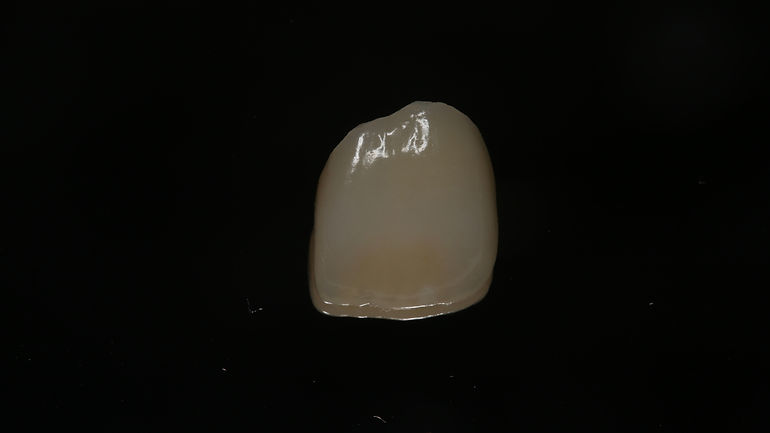
Functionally a crown acts like “a ring”. Basically it binds the remaining natural tooth-structure together and prevents the tooth from splitting. A porcelain crown can change the entire shape and colour of a tooth. Because of the strength of the materials crowns are made from they tend to last longer than dental fillings.
The need for a crown is largely “opinion-based” - which is why different dentists may or may not think a crown is warranted for a particular tooth.
A Prosthodontist is a board-registered specialist in crown and bridge. Any other claimed qualification (i.e. cosmetic dentist, neuromuscular dentist, etc) is a self-dubbed title and just means the dentist has an “interest” in that procedure.
It would be reasonable to expect a Prosthodontist would be more skilled in both the diagnostic and procedural aspects of crown and bridge. They are also highly aware of the biological costs of such procedures and should be more discerning when prescribing crowns.
Restoration of a tooth with a crown generally takes two visits which are three weeks apart:
1. At the first appointment, the old filling is removed and the remaining tooth structure is bonded together. Then the tooth is shaped at a specific taper in order to create space for the future crown. At the conclusion of this appointment we make you a temporary crown so that you can smile, talk and eat as well if not better than you did before. The temporary crown protects and insulates the prepared tooth while the final crown is made.
2. At the second appointment the final crown is tried-in, adjusted and cemented.
There is generally a three-week time between the preparation and cementation appointments - this is the time it takes to get a premium lab to make crowns that we would be comfortable to put our name to.
At Queensland Prosthodontics our focus is to produce the best crowns possible for our patients - that is use the best materials, techniques and dental technicians we can source. If sending Dental work overseas or using chair-side milling machines improved our quality we would do it! Unfortunately this is not the case and all these approaches do is increase the profit-margin for the treating clinician - not the quality for the patient!
Dental Laboratories that make “cheap crowns” often send their work to China (such as Southern Cross Dental Laboratory), use non-gold containing metal alloys or mill the crown in the dental office using a CNC machine. Each of these cost-cutting measures compromises the longevity, fit and appearance of a crown.
“Same Day Crowns” are made in the dental surgery by a milling machine (i.e. Cerec, E4D). These crowns are literally carved out of a solid block of ceramic that is one flat colour. These types of restorations only take one appointment and are cheaper as they eliminate the expense of sending work to a dental laboratory. There are a number of drawbacks to this treatment approach:
• Same-day crowns tend not to fit as well which is a problem for gum inflammation, dental decay and tooth-sensitivity.
• They don’t look like natural teeth- the are milled out of a soild block of ceramic, hence they are one solid colour and tend to be quite opaque.
• The milling machine cannot mill intricate internal line angles, hence the tooth-reduction has to be more aggressive and they don’t fit as well.
• Same-day crowns are weaker when compared to lab-made crowns - Only non-precious materials can be milled chair-side (it would be expensive and wasteful to mill anything out of precious metals such as gold) hence we can only mill softer, non-precious materials. But even in the case of suitable ceramics such as lithium disilicate (Emax) there is evidence to suggest a traditional mould-and-castapproach produces a crown with superior mechanical properties when compared with a crown milled out of the same material.
All our crowns are hand-made by premium Australian dental labs and there is a fair bit of skill that goes into each and every crown. We also only use the best dental ceramics and high-gold alloys to make our crowns. As such our dental technicians charge a premium for their time, skill and use of the best materials and this cost is reflected in our fees.
Apart from the appearance of a crown, a patient is not the best person to assess the quality of their dental work. A patient is able to judge the quality of an experience - that is how compassionate the dentist was, how nice the waiting room may be and whether the dentist was confident in executing the treatment.
It often comes to a surprise to a patient if their crown is failing or of poor technical quality. While the experience is important, the look, fit, contour and bite on a crown is what ultimately will affect how happy a patient is with their dental restoration.
Things we look at when we assess the quality of crown and bridge include:
• The fit is one of if not the most important factors when assessing the quality of a crown. If we consider the size of an individual bacterium that cause gum disease and decay (5 millionths of a metre) then it is clear why the fit is so critical. There are two important ways to assess if a crown fits well:
• Clinically- When we run a probe along the join where a crown margin meets natural tooth structure we want this junction to be minimally if at all perceivable. If there is a gap between the interfaces then it is likely to be filled with millions of bacteria which cause decay and gum disease
• Radiographs- It is extremely difficult to clinically examine the fit of crowns between teeth as access is obscured by the neighbouring tooth. The region betweenteeth is the area most prone to dental decay hence Radiographs are an essential tool to check for decay under crowns. An X-ray of a well fitting crown should show a confluent junction between the crown and tooth without a void, step or abrupt change in contour.
• Well made crowns should camouflage in with the other natural teeth- here we are looking for natural shapes and shades that blend in with their other neighbouring teeth. Teeth are not one solid colour - the shade develops between the different regions of the tooth and they are translucent, multidimensional structures. This is why same-day crowns which are milled chair-side (i.e. Cerec, E4D) or monolithic zirconia do not look natural.
• A crown should bite in harmony with the other natural teeth- being “too high” or out of your bite is a bad thing.
• If a crown is shy of your bite then it will cause extra burden on the teeth remaining in your bite.
• If the crown is too highthis can cause irreversible damage to the crown, the tooth it is biting against or your jaw-joints.
Having dental work done in developing-countries such as Thailand, Bali or India is obviously far less expensive than Australia. Generally it is impossible to talk a patient out of going down this path as they view dental treatment as a “commodity" as opposed to a “skill-based service”. They think they are getting “like-for-like” for a fraction of the cost - but this is far from the truth. Many of these clinics have opulent waiting rooms and operatories which give the impression of quality however if we recall patients can only judge the quality of an experience, not the technical quality of the dental work they are receiving.
Firstly it is important to state that the only thing that is cheaper overseas is labour. The cost of high quality materials (i.e. gold, branded ceramics, etc) and main-brand dental components (i.e. Straumann, Nobel, Astra, etc) is standardised across the globe. So there is a baseline cost that cannot be avoided without using dodgy materials or counterfeit implant components. If the price of a procedure seems too good to be true, it probably is!
It would be a falsity to say that Australia is the only place where quality dental care exists. However if you have a crown done in the town where you live the clinician is medico-legally accountable for their work. They will continue to see it year after year. If it fails you are likely to go back to them.
In the case of travel-dentistry no-one is accountable. International crowns, bridges and implants only have to last the duration of your stay in their country. In the event of a dental emergency it is unlikely you will have the time or finances to drop everything and fly back to the country where you were treated to have the dental work rectified. In the event of negligence it would be a near impractical to take action against an overseas clinic with a foreign legal system. Clinics that hunt for dental tourism know this and exploit these loopholes.
As I said before - it is a near impossibility to talk a patient out of going down the path of overseas dentistry if this is what they have set their mind to. And whilst there may be success stories I am unaware of them.
In a nutshell it is all about risk - crowns, bridges and implants are irreversible, invasive procedures that require careful monitoring and maintenance for the duration of their lifespan. In the case of overseas dental work no-one is accountable and in the event of failure you will wind up in a worse situation than when you started. Any initial savings would pale in comparison to what it may cost to fix up such work.
bottom of page